
How to Conduct an Effective Offsite Meeting
2025.11.14
column
Table of Contents
- Introduction | Definition and Benefits of Off-Site Meetings
- 【STEP1】70% of Success Comes from Pre-Meeting Preparation
- 【STEP2】How On-the-Day Facilitation Can Transform the Atmosphere
- 【STEP3】Post-Meeting Actions to Avoid Wasted Efforts
- Common Pitfalls and How to Avoid Them
- Conclusion | Why Off-Site Meetings Are Worth Repeating
Introduction | Definition and Benefits of Off-Site Meetings
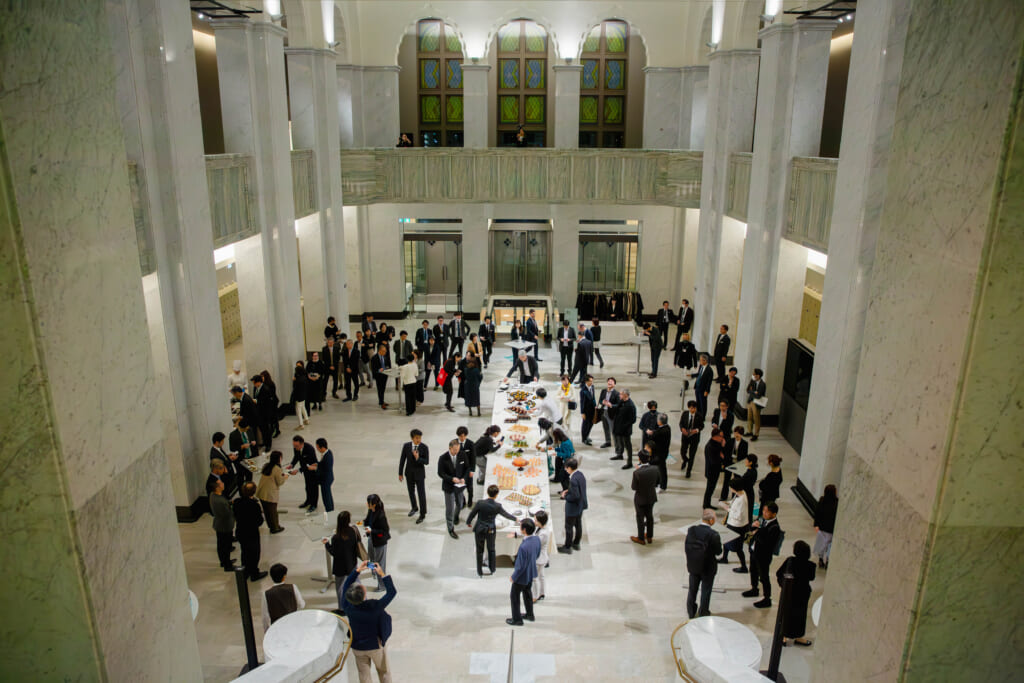
Off-site meetings refer to conferences, training sessions, or workshops held outside of the usual workplace or meeting room. By stepping into a non-routine environment, participants are more likely to think flexibly, express ideas freely, and generate new perspectives. These meetings are particularly effective for fostering communication across departments and strengthening team cohesion. Moreover, being able to focus without daily distractions encourages in-depth discussions, leading to improvements in business operations and the development of mid- to long-term strategies—another significant benefit of this approach.
ーClick here for related articles
- オフサイトミーティングとは?今注目されている理由を解説
- 大阪でおすすめのオフサイトミーティング会場5選
- オフサイトミーティングがチームビルディングにおすすめの理由|メリット・デメリットを解説
- 非日常が生む創造性|オフサイトミーティングのすすめ
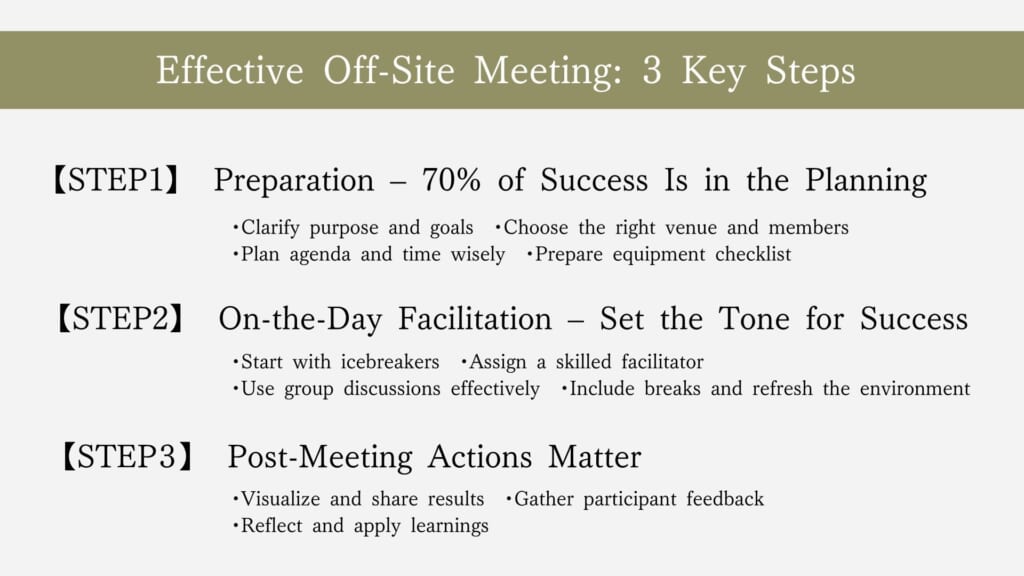
【STEP1】70% of Success Comes from Pre-Meeting Preparation

Clarifying Objectives and Goals
An off-site meeting is a valuable opportunity to achieve results that are hard to obtain through routine meetings. Clearly defining its purpose—whether it’s generating new ideas, fostering team building, or solving specific challenges—brings consistency to the agenda, format, and participants involved.
Selecting the Right Venue and Participants
The venue plays a crucial role in shaping the atmosphere and focus of the meeting. Locations that provide a sense of escape from the everyday, such as natural settings or historical spaces, can be highly effective. It’s also important to consider who participates. Involving members across departments or including senior executives can significantly influence the outcome.
Designing the Agenda and Allocating Time Effectively
A thoughtfully designed agenda is directly linked to a successful outcome. Balancing periods of focus and relaxation—such as discussions, sharing sessions, and breaks—encourages active participation and open communication. Avoiding overly tight schedules helps maintain engagement throughout the day.
Creating a Checklist for Equipment and Supplies
Nothing disrupts a productive meeting more than missing equipment or unusable facilities on the day. Prepare a checklist in advance for essentials such as projectors, whiteboards, Wi-Fi, power outlets, name tags, and notepads. Organizing these items ahead of time ensures the event runs smoothly.
【STEP2】How On-the-Day Facilitation Can Transform the Atmosphere

Icebreakers to Set a Relaxed Tone
When participants are meeting for the first time or don’t usually interact, it’s important to ease initial tension. Simple activities like self-introduction games, casual chat time, or light workshops can help break the ice, creating a relaxed atmosphere that encourages open conversation.
The Role of the Facilitator and Tips for Smooth Progress
A neutral facilitator is essential to keep the meeting running smoothly. They should manage time effectively, ensure no one dominates the conversation, and make ideas visible using tools like whiteboards or notes. Depending on the nature of the meeting, hiring an external professional facilitator may also be a smart move.
Strategic Use of Group Discussions
Depending on the theme, small-group discussions can be effective for deeper engagement. Organizing by issue or forming cross-departmental teams helps align with the meeting’s goals. Make sure to allocate time for each group to present their discussions to the whole team, ensuring shared understanding.
Breaks and Environmental Changes to Sustain Focus
In long meetings, participants can easily lose focus. Allowing enough breaks in the schedule is key. Include refresh times, short walks, or outdoor discussions to introduce variety and keep the energy high. These changes help maintain the quality of discussions throughout the day.
【STEP3】Post-Meeting Actions to Avoid Wasted Efforts

Visualizing and Documenting Outcomes
Ideas and conclusions that emerge during the meeting must be documented and shared. Use appropriate formats depending on the purpose—such as meeting minutes, a summary of key takeaways, or an action item list—and clearly define who will do what by when. Ideally, a preliminary version should be shared immediately after the meeting ends.
Collecting Feedback from Participants
To improve the quality of future meetings, it’s essential to gather feedback from participants. Collecting multi-faceted evaluations on the content, facilitation, venue, and materials can help identify areas for improvement. Simple tools like online surveys or comment sheets are effective for this purpose.
Applying Results in Daily Operations and Conducting a Review
If the outcomes of the meeting are not reflected in day-to-day operations, the offsite loses its purpose. Conclusions and identified issues should be taken back to each department or team and broken down into actionable items. Additionally, organizers should allocate time to reflect on what worked well and what could be improved.
Common Pitfalls and How to Avoid Them

One common pitfall in offsite meetings is a lack of clear objectives, which can lead to unfocused discussions. To prevent this, it’s important to share the meeting’s purpose and expected outcomes in advance, ensuring that everyone is aligned from the start. Another frequent issue is low participant motivation. Encourage active engagement through icebreakers or pre-meeting surveys to make participants feel more involved.
Poor time management is also a common challenge, often resulting in insufficient discussion of key topics. The facilitator must manage the agenda closely to ensure that important items are addressed. Inadequate meeting notes and follow-up can dilute the impact of the session, so appointing someone to document and promptly share the outcomes is crucial.
Using a unique venue can also help boost success by providing a special, out-of-the-ordinary environment that enhances participants’ enthusiasm and encourages more active communication.
Conclusion | Why Off-Site Meetings Are Worth Repeating
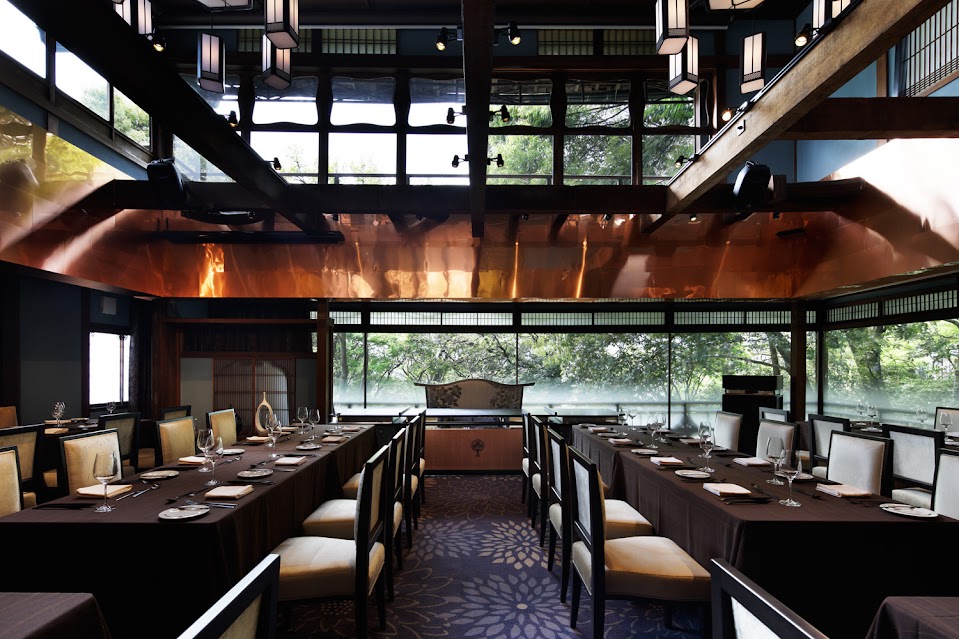
Offsite meetings should not be treated as one-time events. When held regularly, they can significantly enhance organizational communication and strengthen team cohesion. Hosting these meetings in unique venues helps boost participant motivation, encouraging deeper discussions and more meaningful interactions.
Such continuous efforts lead to greater organizational growth and improved outcomes. At UNIQUE VENUES OF JAPAN, we offer one-stop support from planning to on-the-day operations. Feel free to contact us for more information.
PLACE
Find a venue
Spend time with your loved ones,
at a one-of-a-kind location
where you can experience Japanese culture.